Loading...
Loading...
Loading...
Opening Hours: Mon - Sat : 9:30 am to 6:00 pm, Sunday Closed

Department of Speech Pathology

Home Department of Speech Pathology
Top Speech Therapist in Thiruvalla

Transforming Communication, Changing Lives

Speech is the spoken word used to communicate or express feelings and thoughts. "Communication is one of the most important skills you require for a successful life." If you are searching for a speech therapist near me, Otosense Healthcare in Thiruvalla provides exceptional speech and language pathology services to help individuals communicate effectively.

All communication disorders carry the potential to isolate individuals from their social and educational surroundings. While many speech and language patterns ("baby talk") are part of a young child's normal development, they can become problems if they are not outgrown as expected. Because of the way the brain develops, it is easier to learn language and communication skills before the age of 5. When children have muscular disorders, hearing problems, or developmental delays, our pediatric speech therapist in Thiruvalla offers crucial early intervention.

It is essential to find appropriate, timely intervention. Our registered Speech and Language Pathologists deliver individualized comprehensive care by utilizing therapeutic play, innovative technology, and close collaboration with parents. For the best speech therapy in Thiruvalla, trust Otosense to guide your child's developmental journey.
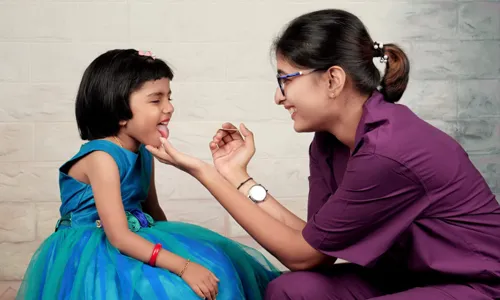
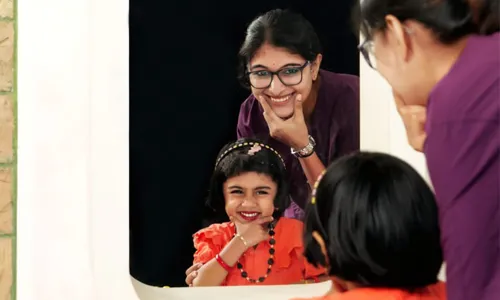
Best speech therapist near me in Thiruvalla helping a child


Expert speech therapy sessions in Pathanamthitta Kerala
Our Doctors

Department of Speech Pathology

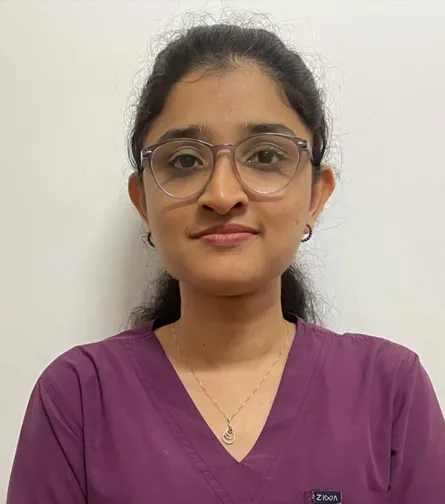
Ms. Gifty Merlin Chacko

Ms. Gifty Merlin Chacko

Speech-Language Pathologist

Ms. Gifty Merlin Chacko

Audiologist & Speech-Language Pathologist

Ms. Gifty Merlin Chacko is an Audiologist and Speech-Language Pathologist, graduated from the Kerala University of Health Sciences (KUHS). She has expertise in the assessment and management of children with speech and language disorders, adult language disorders, and children with cochlear implants.

Professional Experience:
  • Speech and Hearing Department – Jyothis Special School, Mavelikkara
Specialized Training:
  • National Institute of Physical Medicine and Rehabilitation (NIPMR)
  • VPS Lakeshore Hospital
  • Believers Church Medical College Hospital
  • Yenepoya Medical College, Mangalore
Certifications:
  • Oral Placement Therapy (OPT)

Known for her professional commitment, approachable nature, and positive attitude, she continues to contribute effectively to the rehabilitation and well-being of her patients.

Frequently Asked Questions

Answers from our Speech Therapists

Every child develops at a different pace, but significant difficulty understanding language, speaking, using gestures, or communicating with others may need professional evaluation. If you feel your child's communication is noticeably behind other children of the same age, or he/she is not able to express the words even after one year, definitely the child needs a Speech-Language Pathologist evaluation.

Good understanding is encouraging, but a child who is significantly delayed in expressing themselves should still be assessed. An evaluation can identify whether the delay is simply a late language development pattern or whether additional support is needed.

There is no fixed minimum age but usually we start speech therapy at the age of one and half year or two years, it depends on the cause. Early intervention is generally beneficial, and even infants and toddlers can be assessed when there are concerns about communication, feeding, or early language development.

If your child is not responding consistently to their name, has limited eye contact or gestures, difficulty understanding simple instructions, very few words for their age, difficulty combining words, speech that is difficult to understand, stammering or difficulty speaking fluently, difficulty with social communication, restlessness, inattention, poor imitation skills, and poor eye contact.

It is better not to simply wait when there is a clear concern. A speech and language assessment can determine your child's current communication skills and whether intervention would be helpful.

Speech therapy does not guarantee a particular timeline. The therapist identifies the child's specific difficulties and uses appropriate activities to develop communication skills. Progress varies from child to child.

There is no standard duration. It depends on the child's age, underlying difficulty, severity, participation, home practice, and progress. The therapist will review progress regularly and modify the therapy plan.

The frequency depends on the child's individual needs. Some children may benefit from three sessions per week, while others may require more frequent intervention.

Yes. Speech therapy is a team effort, and home practice is very important. Parents can incorporate language-building activities into everyday routines such as playing, eating, bathing, reading, and travelling.

At Otosense, our Speech-Language Pathologists guide parents in creating and incorporating appropriate activities at home. These activities are also integrated into therapy sessions, helping parents understand how to support their child's communication development in everyday situations.

It can be a language or social-communication difficulty, rather than simply a pronunciation problem. A proper assessment helps determine how your child understands, uses, and responds to communication.

Some speech sounds develop later than others, so occasional pronunciation errors can be age-appropriate. However, if your child's speech is consistently difficult to understand or the errors continue beyond the expected developmental stage (After 4 years), an assessment is advisable.

Not always. However, hearing plays an important role in speech and language development. A hearing assessment is often recommended when a child has significant speech or language delay, even if the parents feel the child can hear.

Understanding videos or repeating words from cartoons does not necessarily mean that a child has developed functional communication. Children learn language best through interactive communication with people, including talking, playing, responding, and sharing attention. Continuous use and addiction of cartoon may lead to behavioural issues.

Excessive screen exposure can reduce opportunities for face-to-face interaction, conversation, play, and social communication. Excessive screen time can lead to:
  • Delayed speech and language development
  • Reduced attention and concentration
  • Fewer opportunities for face-to-face communication
  • Difficulty with social interaction
  • Reduced imaginative and interactive play
  • Sleep problems
  • Less physical activity
  • Increased irritability or difficulty regulating emotions
  • Reduced parent–child interaction
  • Difficulty developing communication skills through real-life experiences

Repeating words or sentences is called echolalia. It can occur during typical language development, especially in young children, but persistent or unusual echolalia may warrant a speech-language assessment, particularly when accompanied by other communication concerns.

It is generally better not to interrupt, rush, or repeatedly correct a child who stammers. Give them time to speak, listen patiently, and maintain a relaxed communication environment. If stammering is frequent or causing distress, consult our Speech-Language Pathologist.

Yes. Speech therapy can support children with autism in areas such as functional communication, understanding language, expressive language, social communication, conversation, gestures, and alternative communication when appropriate. At Otosense we have individualized goals and activities for each child.

Yes. Speech-Language Pathologists can work on communication, understanding, expression, social communication, speech clarity, and other relevant skills according to the child's developmental profile.

Being exposed to two languages does not by itself cause a language disorder. Multilingual children may distribute their vocabulary across languages, this is the most common myth and the research is clear. Bilingualism does not cause speech or language delays. Bilingual children develop language at the same overall rate as monolingual children. The total number of words across both languages is comparable to a monolingual child’s vocabulary at the same age. So, assessment should consider the child's communication across all languages they use.

Not necessarily. Parents should generally communicate naturally in the language or languages they are most comfortable using. Rich, meaningful interaction is more important than artificially limiting communication to one language.

Our trained Speech-Language Pathologists can assess and manage feeding, chewing, and swallowing difficulties. These problems should be professionally evaluated because the appropriate treatment depends on the underlying cause.

Yes. Therapy can address speech clarity, rate of speech, articulation, language organization, and other factors affecting intelligibility, depending on the underlying difficulty.

Not every child needs to complete a hearing test before the first speech assessment, but hearing should be considered whenever there are concerns about speech or language development. At Otosense our therapist will recommend an audiological evaluation if it's required.

Our therapist assesses: Understanding of language, Vocabulary and sentence development, Speech sounds and clarity, Communication and interaction, play skills, social communication, Fluency, and Oral-motor/feeding skills when relevant. Finally, our therapist discusses the findings and recommends an appropriate intervention plan.

Try to: Talk to your child during everyday activities. Follow their interests and play with them. Read picture books together. Give them opportunities to request and communicate.

Expand what they say. Child: "Car." Parent: "Yes, a red car!"
Ask fewer test-like questions and have more natural conversations.
Give your child enough time to respond. Praise communication attempts rather than focusing only on mistakes. Give an opportunity to play with their peer group at least once in a week. Spend more time with your children in a playground or park with continuous communication.

If you have a persistent concern about your child's communication, you do not have to wait for the child to "outgrow it." Early assessment can provide clarity and, when needed, allow intervention to begin earlier.

At OTOSENSE Child Development Centre, our Speech-Language Pathologists assess each child's individual communication needs and provide personalized therapy with parent guidance and home-based support.
Serving the Community

Accessible from Thiruvalla, Paippad, Haripad & Nearby Areas

Otosense Healthcare is centrally located, making it easy for families across Kerala to access top-tier speech therapy and language pathology care. We proudly serve children and adults from a wide geographic area.

  • Paippad
  • Thrikodithaanam
  • Anjilithanam
  • Kaviyoor
  • Nalukodi
  • Chanjody
  • Kunnamthanam
  • Mallapally
  • Kuttapuzha
  • Vellapally
  • Madapally Kizhakanmuthoor
  • Ranni
  • Vadasserikkara
  • Kozhencherry
  • Pathanamthitta
  • Thiruvalla & Haripad

Get In Touch

Church Complex, Paliyekkara,
      Market Road near Paliyekkara
      Road, Thiruvalla, Kerala

      Pin: 689101

info@otosensehealthcare.com ,

      otosensehealthcare@gmail.com

+91-9947208683 ,

      +91-9495208683

Follow Us

© Otosense. All Rights Reserved.

Designed by Aumento

Call

Whatsapp